
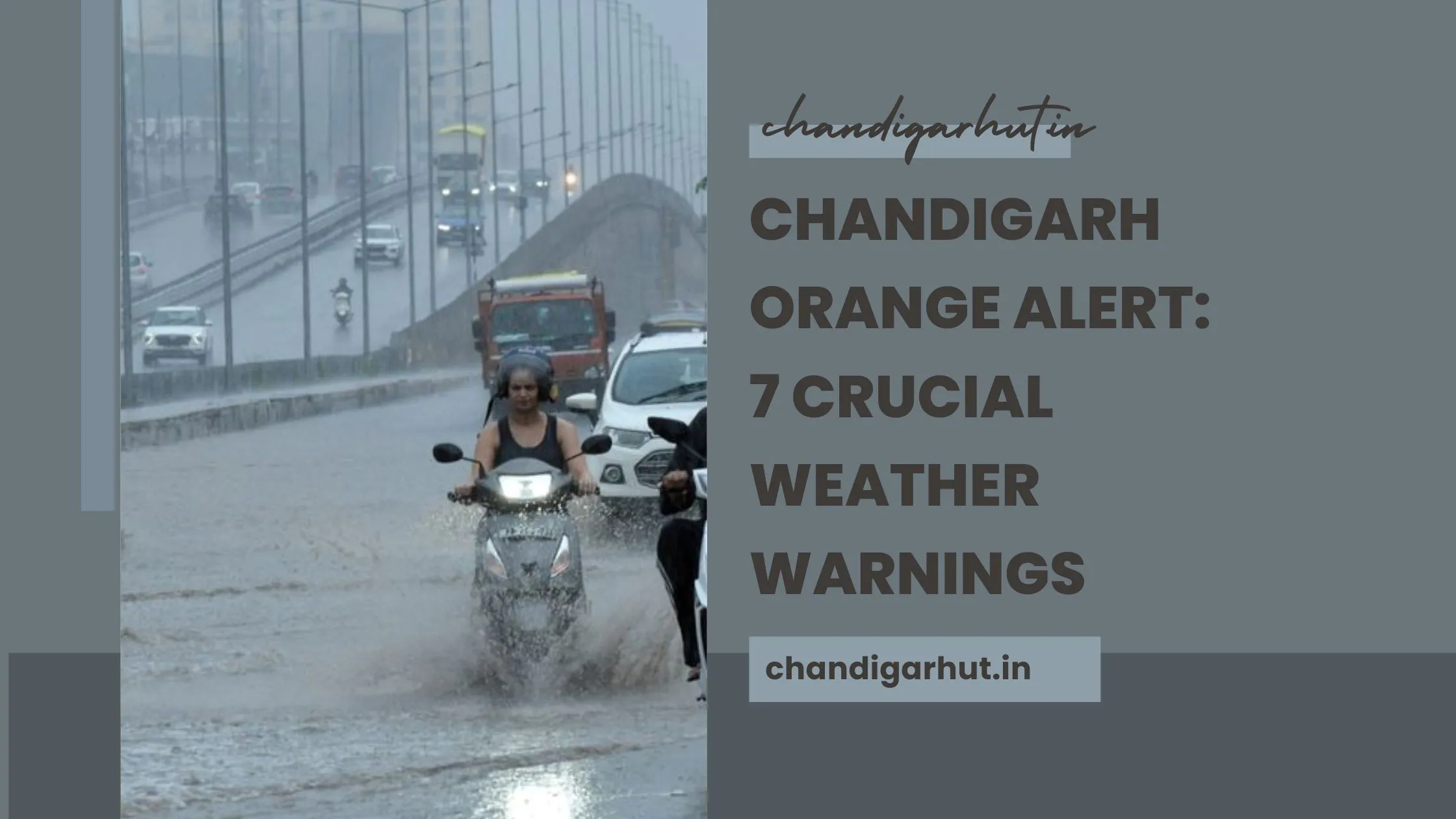
Chandigarh, Mohali and Panchkula are facing a spell of unsettled weather as the India Meteorological Department (IMD) warns of thunderstorms, lightning, gusty winds, rain and possible hailstorms on October 15 and 16, 2026. The Chandigarh orange alert has raised concerns among residents, commuters and farmers, particularly because harvested paddy is lying exposed at several grain markets during the ongoing harvesting season. While the weather may bring relief from daytime warmth, strong winds and hail could create risks for people, vehicles, infrastructure and agricultural produce.
Table of Contents
- Key Takeaways
- What Is the Latest Chandigarh Orange Alert Update?
- Why Has the IMD Issued an Orange Alert for Chandigarh?
- What Is the Difference Between Orange and Yellow Weather Alerts?
- What Is the Day-Wise Chandigarh Weather Forecast?
- How Will the Weather Affect Chandigarh, Mohali and Panchkula?
- Why Is the Chandigarh Orange Alert a Concern for Paddy Farmers?
- What Safety Precautions Should Residents Follow During the Alert?
- Can the Orange Alert Affect Schools, Offices and Daily Travel?
- Will Temperatures Drop After the Rain?
- How Can Residents Track Official Weather Updates?
- Frequently Asked Questions
- Final Thoughts
Key Takeaways
October 15: An orange alert warns of severe weather, including thunderstorms, lightning, gusty winds and possible hailstorms.
October 16: A yellow alert indicates continued thunderstorm and lightning risks, with rainfall expected to become less widespread.
Chandigarh Tricity: Residents of Chandigarh, Mohali and Panchkula should prepare for changing weather and possible travel disruption.
Farmers: Harvested paddy should be moved to covered storage or protected against rain and hail.
Weather outlook: Conditions are expected to improve after the main spell, with drier weather forecast from October 17, subject to updated IMD bulletins.
What Is the Latest Chandigarh Orange Alert Update?
The Chandigarh orange alert is part of a weather warning issued as an active western disturbance over northern Pakistan and adjoining Jammu influences weather conditions across northwestern India. The system is expected to trigger rain and thunderstorms across parts of Punjab, Haryana and Chandigarh.
According to the October 15 forecast, the main concerns include:
Thunderstorms accompanied by lightning.
Gusty winds that may reach approximately 40–60 kmph.
Hailstorms at isolated locations.
Light to moderate rainfall across affected areas.
Possible disruption to road travel, outdoor activities and municipal services.
The warning does not mean that every neighbourhood will experience severe weather. Conditions can vary considerably across short distances, and some areas may remain dry even when an alert is in force.
Residents should therefore treat the Chandigarh orange alert as a signal to prepare for potentially hazardous conditions rather than a guarantee of continuous rainfall throughout the day.
Why Has the IMD Issued an Orange Alert for Chandigarh?
The current weather spell is associated with a western disturbance, a weather system that can influence atmospheric conditions over northern India and bring cloud formation, rain, thunderstorms and sometimes hail.
When such a system interacts with local atmospheric conditions, thunderstorms may develop in individual areas. These storms can bring sudden gusts of wind, lightning and short periods of intense rain.
The Chandigarh orange alert has been issued because the expected weather could pose a risk to normal activities and requires residents to take precautions.
The main reasons for concern are:
Strong winds: Loose objects, temporary structures, banners and weak branches may become hazardous.
Lightning: People outdoors, especially in open areas, face additional risk during thunderstorms.
Hail: Ice pellets can damage crops, parked vehicles, glass and lightweight roofs.
Rainfall: Wet roads, reduced visibility and localised waterlogging may affect commuting.
Agricultural losses: Paddy awaiting storage or sale could be damaged if exposed to rain.
The intensity and location of these conditions may change as the weather system moves through the region. Official forecasts should take priority over social media claims and unofficial weather predictions.
What Is the Difference Between Orange and Yellow Weather Alerts?
The IMD uses colour-coded warnings to communicate the potential severity of weather conditions and the level of preparedness required. These alerts help residents, authorities, farmers and emergency services understand whether extra caution is necessary.
The Chandigarh orange alert signals a higher level of concern than a yellow warning. However, neither colour alone tells residents exactly how much rain a particular street will receive.
| Alert colour | General meaning | What residents should do |
|---|---|---|
| Green | No significant weather warning | Continue normal activities while monitoring forecasts |
| Yellow | Be aware of possible adverse weather | Stay updated and take basic precautions |
| Orange | Be prepared for potentially severe weather | Reduce avoidable exposure and follow official advice |
| Red | Take action against a significant weather threat | Follow emergency instructions and avoid dangerous areas |
The table explains the general meaning of the IMD's colour-coded warnings. The precise hazards, expected intensity and recommended actions depend on the bulletin issued for the location and date.
For Tricity residents, the important distinction is that the Chandigarh orange alert calls for greater preparedness on October 15, while the yellow warning for October 16 indicates a lower warning level, not an assurance that all weather risks have disappeared.
What Is the Day-Wise Chandigarh Weather Forecast?
The current forecast points to the main spell occurring on Thursday, followed by a reduction in weather activity. The following details reflect the available forecast issued around October 15, 2026.
OCT 15
Thursday: Orange alert
Thunderstorms, lightning, gusty winds and hail at isolated places are possible. Rain is expected at many places across Chandigarh and Haryana, as well as parts of Punjab.
OCT 16
Friday: Yellow alert
Thunderstorms, lightning and gusty winds remain possible. Rain activity is expected to weaken, although localised showers may still occur.
OCT 17+
Saturday onwards: Improving conditions
The forecast indicates easing rainfall activity and mainly dry or clearer weather. Check updated bulletins before making plans.
The official IMD warning page dated October 15 lists thunderstorm, lightning, squall and hailstorm hazards for Haryana, Chandigarh and Delhi on Thursday. It shows a thunderstorm-related warning for Haryana and Chandigarh on Friday, followed by no warnings from October 17 in its displayed forecast period. The Punjab warning differs by date, so conditions should not be assumed to be identical across the entire region.
This is why checking the latest Chandigarh orange alert and local forecast before leaving home is more useful than relying on a single weather update throughout the day.
How Will the Weather Affect Chandigarh, Mohali and Panchkula?
Although the three cities form the Tricity region, rainfall and storm intensity can vary between them. A storm affecting one sector or locality does not necessarily mean that nearby areas will receive the same amount of rain.
Chandigarh
Chandigarh recorded a maximum temperature of 32.9°C and a minimum of 19.6°C on October 14, according to the previous day's weather observations. No rainfall was recorded during the reported observation periods, despite the unsettled forecast.
With the Chandigarh orange alert in effect for October 15, residents should be prepared for sudden changes, particularly during outdoor travel, school commutes and evening activities.
Mohali
Mohali recorded a maximum of 32.4°C and a minimum of 21.1°C on October 14. The forecasted weather may affect commuters, people travelling between Mohali and Chandigarh, and those using exposed parking areas.
Residents should secure balconies, avoid parking beneath vulnerable branches and allow additional time for journeys if thunderstorms develop.
Panchkula
Panchkula recorded a maximum temperature of 30.8°C and a minimum of 18.5°C on October 14. Although its temperatures were lower than those in Chandigarh and Mohali, this does not mean it will be protected from storms.
The Chandigarh orange alert should be understood as a regional warning requiring attention across the Tricity, while residents should continue to follow the forecast issued for their specific area.
Why Is the Chandigarh Orange Alert a Concern for Paddy Farmers?
The timing of the weather spell is especially important for farmers in Punjab and Haryana. October is a crucial period for paddy harvesting, transportation and procurement. Some harvested produce may be waiting in grain markets, while other farmers may still be completing harvesting operations.
Rain and hail can create several problems:
Wet harvested paddy: Exposed grain can become damp, making drying and storage more difficult.
Harvest delays: Rain can interrupt harvesting, movement of machinery and transportation.
Crop damage: Standing crops may be affected by hail, strong winds or heavy localised rain.
Procurement disruption: Wet produce may require additional handling and drying before it can be stored safely.
Financial pressure: Delays and damaged produce can create additional costs for farmers.
The Chandigarh orange alert is therefore relevant beyond city residents. Its consequences may extend to agricultural communities and supply chains across the surrounding region. The Tribune's report specifically highlights concerns over harvested paddy lying in the open at grain markets.
What should farmers do before the rain?
Farmers should consider these precautions, subject to local agricultural advice:
Move harvested paddy to a covered, secure location wherever possible.
Cover produce with suitable waterproof sheets and protect it from water collecting underneath.
Avoid leaving grain exposed in open fields or market yards.
Follow agricultural advisories before irrigating or applying fertilisers and pesticides.
Check local procurement arrangements and coordinate with relevant officials if rain affects delivery.
The aim is to reduce avoidable losses, not to assume that every field or grain market will experience the same severity of weather.
What Safety Precautions Should Residents Follow During the Alert?
The best response to the Chandigarh orange alert is to take sensible precautions before severe weather begins. Even a short thunderstorm can cause hazards when lightning, hail and strong winds occur together.
Before a thunderstorm
Check official IMD updates before travelling or organising outdoor activities.
Bring lightweight furniture, potted plants and loose objects indoors.
Secure temporary shades, rooftop items and balcony belongings.
Park vehicles away from large trees, loose signboards and unstable structures.
Keep mobile phones charged and save important emergency contact numbers.
During lightning, hail or strong winds
Move indoors to a substantial, enclosed building.
Avoid standing beneath trees, near electric poles or close to power lines.
Stay away from windows during strong winds and hailstorms.
Avoid open fields, rooftops and exposed outdoor spaces during lightning.
Do not touch fallen electrical wires or attempt to remove branches resting on power lines.
While driving in rain
Reduce speed and increase the distance between vehicles.
Switch on appropriate lights when visibility becomes poor.
Avoid flooded underpasses and roads where the water depth is uncertain.
Never drive through flowing water if the road's condition cannot be judged safely.
Pull over at a safe location if visibility deteriorates significantly.
The Chandigarh orange alert is a reminder to prepare in advance rather than wait until a storm is overhead. During an immediate emergency, follow instructions from local authorities and emergency services.
Can the Orange Alert Affect Schools, Offices and Daily Travel?
Potentially, yes. Thunderstorms and gusty winds may affect school transport, office commutes, outdoor events, construction activity and local traffic. However, a weather alert does not automatically mean that schools or offices will close.
Residents should verify any closure announcement directly through the relevant school, employer, district administration or official government channel.
Consider the following example: a family planning an outdoor function in Mohali on Thursday should check the latest forecast before leaving home. If thunderstorms or lightning are forecast near the venue, moving the gathering indoors or postponing outdoor activities would be a safer decision.
Similarly, someone travelling from Panchkula to Chandigarh should allow extra time if rain reduces visibility or slows traffic. This is an illustrative scenario, not a report of an actual closure or disruption.
For commuters, the Chandigarh orange alert makes checking road conditions and allowing additional travel time particularly important. For event organisers, it is a reason to review backup arrangements, secure temporary installations and monitor official updates.
Will Temperatures Drop After the Rain?
Rain and cloud cover can temporarily reduce daytime temperatures, while changing wind conditions may make the weather feel cooler. However, the actual temperature change depends on the intensity of rainfall, cloud cover and the movement of the weather system.
Before the latest spell, Chandigarh recorded a maximum of 32.9°C on October 14, while Mohali recorded 32.4°C and Panchkula 30.8°C. The five-day Tricity forecast published in the report placed maximum temperatures at approximately 31–32°C, with minimum temperatures between 19°C and 21°C. These were forecast values, not confirmed readings for subsequent days.
The Chandigarh orange alert is primarily a warning about potentially hazardous weather, rather than a temperature forecast. Residents should not assume that cooler conditions mean the risk of lightning or strong winds has passed.
How Can Residents Track Official Weather Updates?
Local administration: Follow verified Chandigarh, Mohali and Panchkula administration channels for public safety announcements and any confirmed changes to services.
Weather alerts can change as the system develops. Residents should check the issue date and validity period of each bulletin rather than forwarding old screenshots.
The Chandigarh orange alert should also be distinguished from a red alert or an emergency order. Each communicates a different level of warning or action, and the official bulletin should guide the response.
Frequently Asked Questions
1. Why has Chandigarh received an orange alert?
The IMD issued the warning because thunderstorms, lightning, gusty winds and hailstorms are possible under the influence of a western disturbance affecting northwestern India.
2. When is the Chandigarh orange alert valid?
The reported orange alert applies to Thursday, October 15, 2026. A yellow alert is indicated for Friday, October 16. Residents should check the latest IMD bulletin for any changes.
3. Will it rain in Chandigarh today?
Rain and thunderstorms are forecast for October 15, but the timing and intensity may vary across the city. An alert does not guarantee continuous rain in every sector.
4. Is Mohali also affected by the weather warning?
Yes. Mohali is part of the Tricity region covered by the reported weather concerns. Local conditions may differ from those in Chandigarh and Panchkula.
5. Is Panchkula under the weather alert?
The reported warning covers the Chandigarh Tricity region, including Panchkula. Residents should check the current local forecast for the latest hazard information.
6. Can hailstorms damage paddy crops?
Yes. Hail can damage standing crops, while rain can wet harvested paddy and complicate drying, storage and procurement. Farmers should follow local agricultural advisories and protect exposed produce.
Final Thoughts
The October weather spell is a reminder that changing conditions can affect everyday life even when skies remain clear for part of the day. The key concerns are lightning, gusty winds, possible hail, road safety and the risk to harvested paddy.
For Chandigarh, Mohali and Panchkula residents, the most practical approach is to monitor official forecasts, secure outdoor belongings, drive carefully and avoid unnecessary exposure during thunderstorms. Farmers should give particular attention to protecting harvested produce and following agricultural advice.
The Chandigarh orange alert is a precautionary warning, not a prediction that every locality will experience severe damage. Staying informed, preparing early and following verified instructions can help residents reduce avoidable risks while the weather system passes.
Editorial note: This article reflects the available forecast and reporting as of October 15, 2026. Weather warnings and conditions can change; consult the IMD for the latest official information.
Read the latest Chandigarh weather updates, local news and important Tricity alerts on Chandigarh UT.