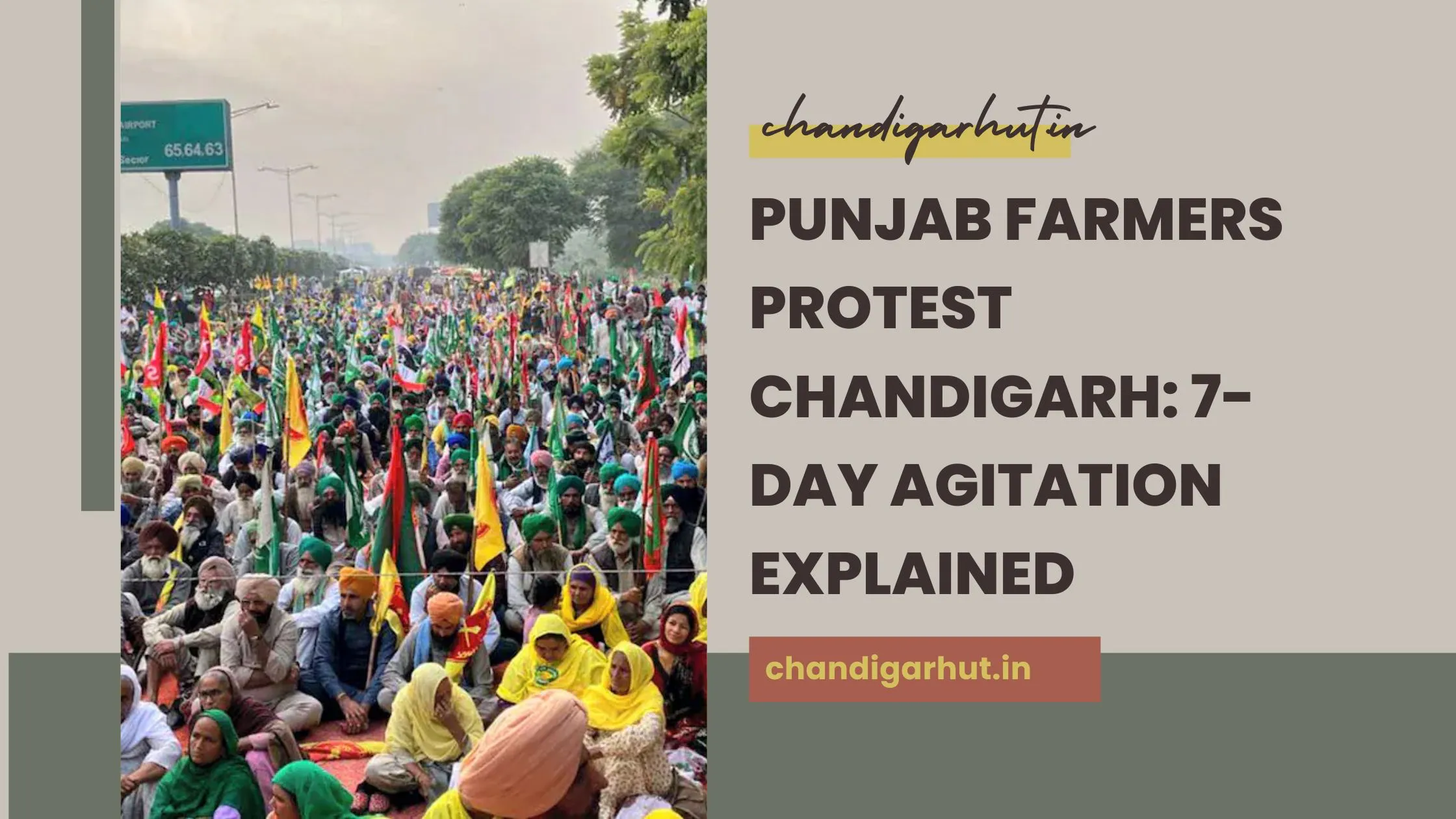
The Punjab Farmers Protest Chandigarh is set to become a major point of attention as farmer organisations prepare for a seven-day agitation from September 1 to September 7, 2026. The proposed protest is linked to a range of agricultural and state-level concerns, including Punjab’s water rights, inter-state water-sharing arrangements, farmers’ debt, MSP-related concerns, crop insurance, land acquisition and other pending demands. Reports indicate that permission has been granted for the demonstration, while traffic and security arrangements are expected to be closely monitored as the protest approaches.
For Chandigarh, the issue is not only about farmers gathering in the city. It also raises larger questions about Punjab’s agricultural economy, water resources, political commitments and the continuing differences between farmer organisations over strategy and demands.
Table of Contents
- Key Takeaways
- What is the Punjab Farmers Protest Chandigarh about?
- When will the Punjab Farmers Protest Chandigarh take place?
- Why is water a major issue in the Punjab Farmers Protest Chandigarh?
- Which farmer organisations are participating in the protest?
- What are the main demands of the farmers?
- Why has the protest created differences among farmer organisations?
- Where could the protest affect Chandigarh traffic?
- What could the Punjab Farmers Protest Chandigarh mean for Chandigarh residents?
- What does this protest reveal about Punjab's farmers?
- What should readers watch before September 1?
- A real-life perspective: why water and farm income matter together
- Is the Punjab Farmers Protest Chandigarh likely to affect daily life?
- What makes the September protest significant?
- FAQs: Punjab Farmers Protest Chandigarh
- Final Word
Key Takeaways
- The Punjab Farmers Protest Chandigarh is planned from September 1 to September 7, 2026.
- Water rights and inter-state water-sharing agreements are among the most contentious issues behind the agitation.
- Other demands reportedly include MSP, agricultural debt, crop insurance, land acquisition and unresolved government commitments.
- BKU (Ekta Ugrahan) and Kisan Sangharsh Committee Punjab have distanced themselves from the September 1 programme over the water-sharing demand.
- Chandigarh residents and commuters should follow official traffic and security advisories before travelling through affected areas.
What is the Punjab Farmers Protest Chandigarh about?
The Punjab Farmers Protest Chandigarh is being organised as a seven-day mobilisation beginning September 1. Reports indicate that farmer organisations participating in the programme intend to press the Punjab government and relevant authorities on several unresolved agricultural and state-related issues.
The proposed agitation is particularly significant because it brings together demands that affect both the farming economy and Punjab’s long-standing concerns over natural resources.
Among the issues being highlighted are:
- Punjab's water rights
- Inter-state water-sharing agreements
- Minimum Support Price (MSP)
- Agricultural debt
- Crop insurance
- Land acquisition
- Sugarcane prices
- Trade-related concerns
- Pending government commitments
The breadth of these demands means the Punjab Farmers Protest Chandigarh is more than a single-issue demonstration.
When will the Punjab Farmers Protest Chandigarh take place?
The proposed Punjab Farmers Protest Chandigarh is scheduled for September 1 to September 7, 2026.
The seven-day duration is important because a prolonged gathering can have a greater impact on traffic movement, public transport, nearby commercial areas and daily commuting compared with a short demonstration.
Reports have also indicated that the protest arrangements have been approved or permitted, although residents should rely on official Chandigarh Police and administration advisories for the latest information regarding routes, restrictions and security arrangements.
Why is water a major issue in the Punjab Farmers Protest Chandigarh?
Water has emerged as one of the most sensitive issues surrounding the Punjab Farmers Protest Chandigarh.
Participating organisations have raised concerns regarding Punjab’s water rights and inter-state water-sharing arrangements. For farmers, the issue is directly connected to irrigation, agricultural productivity and the long-term availability of water.
However, this demand has also exposed differences within the farmer movement.
According to reports, BKU (Ekta Ugrahan) and Kisan Sangharsh Committee Punjab have distanced themselves from the September 1 programme, particularly objecting to the demand for cancelling inter-state water-sharing agreements. Their argument is that such a position could create divisions among farmers in Punjab, Haryana and Rajasthan.
“The water-sharing demand has become one of the biggest points of difference within Punjab’s farmer movement.”
This disagreement demonstrates that the farmers' movement is not a single, uniform organisation. Different unions can share concerns about agriculture while taking different positions on specific political, economic or inter-state issues.
Which farmer organisations are participating in the protest?
The Punjab Farmers Protest Chandigarh is prominently associated with the Punjab unit of the Samyukt Kisan Morcha (SKM) and participating farmer organisations.
Reports have also highlighted participation by organisations such as BKU (Kadian), while other groups have chosen not to associate themselves with the September 1 programme.
Participation at a glance
| Farmer organisation/group | Position reported |
|---|---|
| Samyukt Kisan Morcha Punjab-linked groups | Associated with September 1 mobilisation |
| BKU (Kadian) | Reported to be participating |
| BKU (Ekta Ugrahan) | Distanced itself from the programme |
| Kisan Sangharsh Committee Punjab | Distanced itself over water-sharing demand |
| Other farmer organisations | Position varies according to individual demands |
This division is an important part of understanding the Punjab Farmers Protest Chandigarh rather than treating every farmer union as having exactly the same position.
What are the main demands of the farmers?
The Punjab Farmers Protest Chandigarh brings together several agricultural concerns.
1. Water rights
Farm organisations participating in the agitation have placed Punjab's water rights prominently on the agenda.
2. MSP
Farmers continue to seek stronger protection and assurance around remunerative crop prices and MSP-related concerns.
3. Agricultural debt
Debt remains a major economic pressure for farming families, particularly when input costs, crop losses and uncertain market returns combine.
4. Crop insurance
Farm organisations have also raised concerns about crop insurance and the need for timely and effective compensation when farmers face losses.
5. Land acquisition
Land acquisition remains a sensitive subject because agricultural land is both an economic asset and a family's livelihood base.
6. Pending government commitments
The participating organisations have also referred to commitments and promises that they believe remain unresolved.
Together, these concerns give the Punjab Farmers Protest Chandigarh a much wider agricultural agenda.
Why has the protest created differences among farmer organisations?
The most important internal disagreement concerns the demand to cancel or annul inter-state water-sharing agreements.
BKU (Ekta Ugrahan) and Kisan Sangharsh Committee Punjab reportedly objected to this demand because they believe it could weaken unity among farmers across Punjab, Haryana and Rajasthan. They also disputed the use of their names in a joint statement associated with the demand.
This development is significant because India's farmer movements frequently involve multiple unions with different priorities.
A farmer organisation may strongly support MSP reforms, debt relief or crop insurance while disagreeing with another union over water policy.
That distinction is essential when following the Punjab Farmers Protest Chandigarh.
Where could the protest affect Chandigarh traffic?
The exact traffic impact can change depending on the final protest arrangements, police deployment and movement of farmers into the city.
Some reports have referred to areas around Airport Road and the Sector 48–49 side of Chandigarh in connection with the proposed arrangements.
Commuters should therefore:
- Check Chandigarh Police traffic updates before travelling.
- Allow additional time for journeys.
- Avoid protest-affected roads if alternative routes are advised.
- Follow barricading and diversion instructions.
- Avoid entering restricted areas simply to observe the demonstration.
- Check public transport updates if travelling during peak hours.
Chandigarh has previously managed large farmer demonstrations through designated protest locations and negotiated routes. During an earlier farmer protest, unions were allowed to camp at Sector 34, illustrating how authorities can use designated areas and route management to balance public movement with the right to protest.
What could the Punjab Farmers Protest Chandigarh mean for Chandigarh residents?
For ordinary residents, the biggest immediate concern is likely to be mobility and traffic management.
A seven-day protest could affect:
- Daily office commuters
- Students travelling between Chandigarh, Mohali and Panchkula
- Airport-bound passengers
- Public transport
- Commercial traffic
- Residents living close to protest or diversion routes
However, the exact impact will depend on the size of the gathering and police arrangements.
Residents should avoid relying solely on social-media posts. Official Chandigarh Police and administration advisories should be treated as the most reliable source for road closures, diversions and security instructions.
What does this protest reveal about Punjab's farmers?
The Punjab Farmers Protest Chandigarh reflects a much deeper conversation about the future of farming in the state.
Punjab's agricultural economy is closely connected to water availability, procurement, crop prices, land, government policy and rural debt. When farmers protest, the immediate demand may concern a specific policy, but the underlying question is often broader:
Can farming in Punjab remain economically viable for the next generation?
That question gives the agitation an emotional dimension. For many farming families, agriculture is not simply a profession. It is a livelihood inherited across generations.
At the same time, the differences between farmer organisations show that there is no single solution or universally shared strategy.
What should readers watch before September 1?
The situation surrounding the Punjab Farmers Protest Chandigarh may evolve before the protest begins.
Readers should watch for:
- Final protest venue
- Number of participating unions
- Chandigarh Police traffic plan
- Road diversions
- Parking restrictions
- Security arrangements
- Public transport changes
- Statements from participating and non-participating farmer organisations
- Any talks between governments and farmer representatives
The protest could also change if negotiations produce progress on specific demands.
A real-life perspective: why water and farm income matter together
Consider a hypothetical farmer in Punjab growing wheat and paddy. If irrigation becomes more difficult, crop productivity can be affected. If input costs rise while market returns remain uncertain, household debt pressure can increase. If crop insurance compensation is delayed after a loss, the financial impact can become even greater.
This explains why farmers often connect apparently separate issues—water, MSP, debt, insurance and land into one larger demand for agricultural security.
That broader context is crucial when understanding the Punjab Farmers Protest Chandigarh.
Is the Punjab Farmers Protest Chandigarh likely to affect daily life?
It may, particularly for people travelling through areas where protest gatherings, tractor-trolleys, marches or police diversions are planned.
However, residents should not assume that the entire city will be shut down.
The Punjab Farmers Protest Chandigarh is a protest programme, not automatically a city-wide shutdown. The practical impact will depend on the location, size and movement of the gathering and the restrictions announced by authorities.
What makes the September protest significant?
The Punjab Farmers Protest Chandigarh is significant for three reasons.
First, it comes amid continuing farmer mobilisation over unresolved agricultural concerns.
Second, water-sharing has made the proposed agitation particularly politically sensitive.
Third, disagreements within the farmer movement demonstrate how difficult it can be to build a common strategy around issues that involve multiple states.
The protest therefore deserves attention not only from farmers but also from policymakers, commuters, businesses and Chandigarh residents.
FAQs: Punjab Farmers Protest Chandigarh
When is the Punjab Farmers Protest Chandigarh scheduled?
The proposed protest is scheduled for September 1 to September 7, 2026, making it a seven-day farmer mobilisation.
Why are Punjab farmers protesting in Chandigarh?
The reported demands include water rights, inter-state water-sharing, MSP, agricultural debt, crop insurance, land acquisition and pending government commitments.
Is every farmer organisation supporting the protest?
No. BKU (Ekta Ugrahan) and Kisan Sangharsh Committee Punjab have distanced themselves from the September 1 programme, particularly over the water-sharing demand.
Will Chandigarh traffic be affected?
Traffic disruptions are possible around protest-related routes and gathering points. Commuters should check official traffic advisories before travelling.
Is the protest only about MSP?
No. MSP is one concern, but the reported agenda also includes water rights, debt, crop insurance, land acquisition, sugarcane prices and other unresolved agricultural issues.
Final Word
The Punjab Farmers Protest Chandigarh is shaping up as an important seven-day mobilisation beginning September 1. Beyond the visible scenes of farmers, tractors and protest banners, the agitation reflects difficult questions about Punjab's water resources, farm income, debt, government commitments and the future of agriculture.
At the same time, the differences among farmer organisations are a reminder that the farming community does not speak with one voice on every issue. Th e disagreement over inter-state water-sharing could influence both the scale and political character of the September agitation.
For Chandigarh residents, the practical priority is simple: stay informed, follow official advisories and plan travel carefully. For policymakers, the bigger challenge is addressing the underlying concerns that continue to bring farmers back to the streets.
Chandigarh UT will continue to track important developments around the protest, including participation, traffic arrangements, official advisories and any changes to the September 1–7 programme.