Chandigarh — known for its planned streets, greenery, and relatively cleaner environment — is now frequently in the news for the wrong reasons. If you’ve been searching for a Chandigarh pollution update, you’re not alone. Residents, tourists, and policymakers are increasingly concerned about deteriorating air quality and its effects on public health, daily life, and long‑term well‑being. In this blog, we’ll explore the latest data, why pollution persists, what’s being done, how it affects you, and what you can do about it.
1. Why This Chandigarh Pollution Update Matters
Over the last few months, Chandigarh’s air quality has repeatedly dipped into the ‘poor’ and even ‘severe’ categories according to official AQI readings. On some days, the Air Quality Index (AQI) — a measure of air pollution — has crossed 370, placing it in the severe range where air becomes unhealthy for everyone, not just sensitive groups.
This Chandigarh pollution update will help you understand what’s going on, what factors are contributing to pollution, and how it impacts you and your family.
2. Current Air Quality Snapshot
As of the latest data:
- Chandigarh’s AQI has been recorded in the severe category (above 300) at times, indicating dangerously polluted air.
- PM2.5 levels — the tiny particles that penetrate deep into lungs — have reached levels well above safe standards.
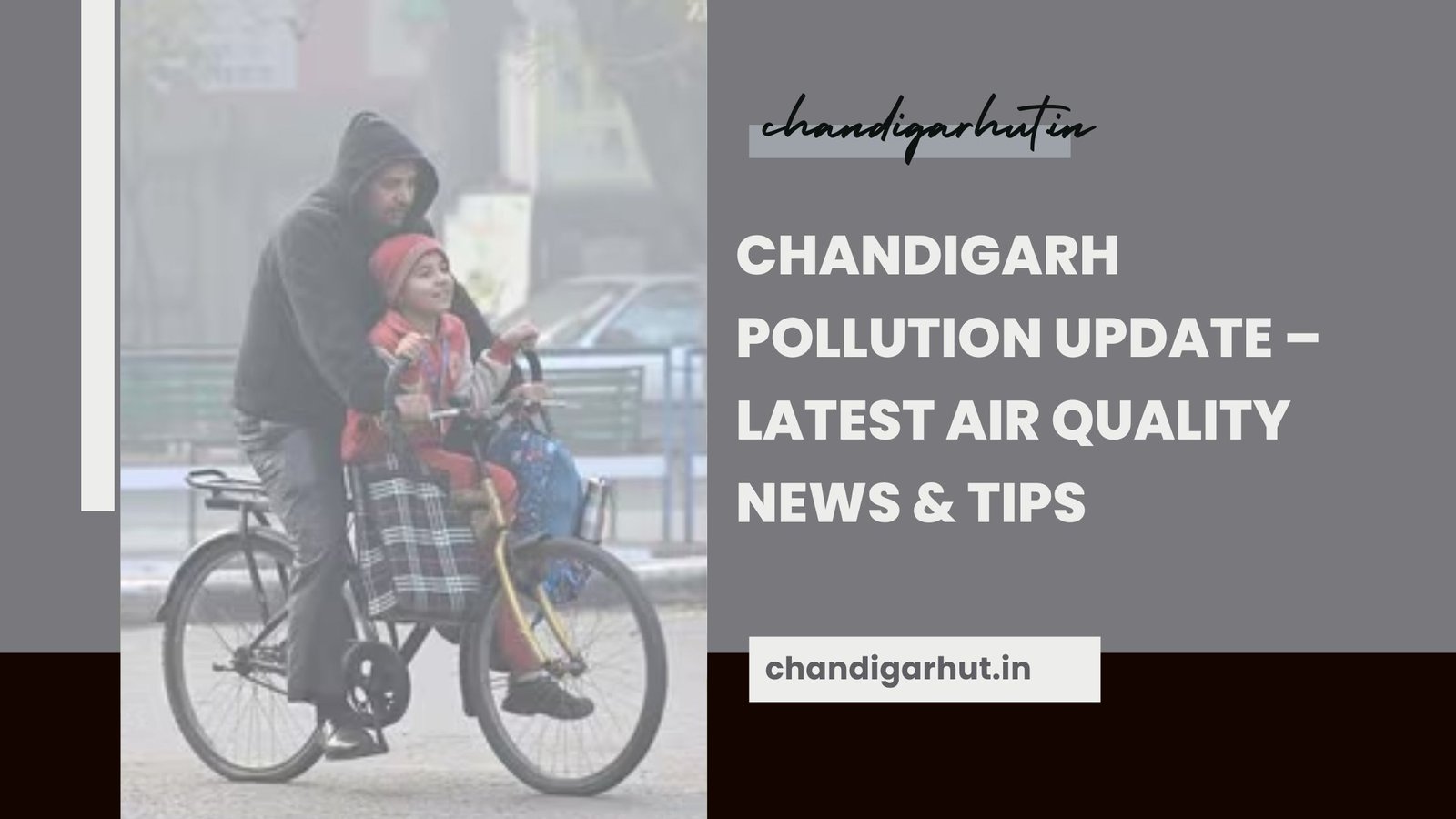
- Dense fog and smog have further reduced visibility and worsened breathing conditions in parts of the city.
This situation is the core of our Chandigarh pollution update, showing that air quality isn’t just a headline — it’s affecting real lives every day.
3. What Causes Pollution in Chandigarh?
3.1 Winter Weather Traps Pollution
During winter, calm winds and temperature inversion trap pollutants near the ground. This means smoke, dust, and vehicle emissions stay close to street level. This seasonal effect is a major driver behind poor air quality — a key part of the Chandigarh pollution update.
3.2 Vehicular Emissions
Vehicles — cars, buses, trucks — contribute significantly to emissions in Chandigarh, especially during colder months when more people use cars instead of walking or cycling.
3.3 Stubble Burning in Surrounding States
Though Chandigarh itself doesn’t have large farms, smoke from crop stubble burning in nearby Punjab and Haryana travels into the city, adding to pollutant levels — a recurring point in many Chandigarh pollution updates.
3.4 Construction Dust and Urban Activities
Ongoing construction projects, uncovered roads, and construction waste contribute to dust — another reason why the city’s air quality continues to struggle.
4. Health Impacts of Poor Air Quality
Air pollution affects everyone, but some groups are at higher risk. This section of our Chandigarh pollution update explains the health implications.
4.1 Short‑Term Effects
- Coughing and throat irritation
- Eye irritation and watering
- Headaches
- Reduced lung function in children and elderly
4.2 Long‑Term Risks
- Chronic respiratory diseases (like asthma and bronchitis)
- Heart disease and stroke
- Increased hospital admissions for breathing difficulties
These health risks mean that staying informed with regular Chandigarh pollution updates isn’t just informative — it’s essential for personal health planning.
5. Impact of Pollution on Chandigarh’s Daily Life
Poor air quality doesn’t just stay in the air — it affects everyday life in Chandigarh. Residents often report difficulty in commuting during peak smog hours, as visibility drops and respiratory discomfort increases. Children are sometimes kept indoors to avoid exposure, impacting school routines and outdoor play. Joggers, cyclists, and fitness enthusiasts may have to skip their regular outdoor exercises.
Local businesses, especially those relying on foot traffic, may see a decline during periods of severe pollution. Restaurants with outdoor seating, street vendors, and construction projects also feel the effects of smog and dust. Healthcare facilities report an increase in patients with respiratory issues, highlighting the direct health and economic impact of pollution.
By understanding these effects, residents can make informed decisions and take preventive measures — which is why staying updated through a Chandigarh pollution update is essential.
6. Role of Technology in Monitoring and Reducing Pollution
Technology is playing an increasingly important role in tackling Chandigarh’s air pollution problem. Advanced air quality monitoring systems are now installed across the city, providing real-time data on AQI levels, PM2.5, PM10, and other pollutants. Mobile apps and online dashboards allow residents to receive instant Chandigarh pollution updates, helping them plan outdoor activities safely.
Innovations such as smart traffic management, electric vehicles, and sensor-based dust control systems are being implemented to reduce emissions. Air purifiers in schools, offices, and homes help mitigate exposure to harmful particles. Furthermore, predictive AI models can forecast pollution spikes based on weather, industrial activity, and stubble burning patterns, giving authorities time to act proactively.
By leveraging technology, Chandigarh can not only monitor pollution more effectively but also implement targeted solutions that protect public health and improve quality of life
7. Government & Community Measures
7.1 Pollution Monitoring and Alerts
Authorities use AQI monitors to issue daily alerts and advisories, giving residents up‑to‑date Chandigarh pollution updates so they can plan outdoor activities accordingly.
7.2 Clean Air Initiatives
Efforts under the National Clean Air Programme (NCAP) and local dust‑control efforts — such as road sprinkling vehicles and emission checks — aim to reduce pollution.
7.3 Public Health Advisories
With high AQI levels, health departments have issued warnings against outdoor walks when air quality exceeds harmful thresholds.
8. What Residents Can Do
Here are practical steps you can take — another important piece of any Chandigarh pollution update:
8.1 Monitor Daily AQI
Check AQI apps and official updates before planning outdoor trips.
8.2 Use Masks and Purifiers
High‑quality masks (like N95) and indoor air purifiers can significantly reduce exposure during peak pollution.
8.3 Carpool or Use Public Transport
Reducing vehicle use helps cut emissions — even small changes matter.
8.4 Avoid Burning Waste
Never burn garbage or leaves at home — it contributes local smoke to already poor air.
8.5 Support Green Initiatives
Planting trees, advocating for cleaner fuels, and community actions make a difference over time.
9. Seasonal Variations and Their Effect on Chandigarh’s Air Quality
Chandigarh’s air quality fluctuates throughout the year due to seasonal changes. During winter, temperature inversions and calm winds trap pollutants near the ground, causing AQI levels to rise sharply — often reaching the poor or severe categories. In contrast, the monsoon season helps wash away pollutants, temporarily improving air quality.
Spring and autumn bring moderate levels of pollution, but occasional stubble burning from neighboring states can spike AQI levels even during these months. Understanding these seasonal patterns is crucial for residents, schools, and businesses to plan outdoor activities and take preventive measures. Regularly checking a Chandigarh pollution update ensures that everyone can stay informed and act accordingly.
10. FAQs:
Q1: What does AQI mean?
AQI stands for Air Quality Index. It’s a metric used to indicate how clean or polluted the air is and what health effects might be a concern.
Q2: When is Chandigarh air worst?
Winter months — typically from November to January — see the worst pollution levels due to weather conditions and additional smoke from stubble burning.
Q3: Is pollution the same every day?
No. AQI changes throughout the year. Official Chandigarh pollution updates give daily figures to track changes.
Q4: Who is most affected by poor air quality?
Children, elderly people, pregnant women, and those with respiratory or heart conditions are most vulnerable.
Q5: Can air quality improve quickly?
Yes — events like rain, wind, or policy actions can temporarily improve AQI, but long‑term solutions take sustained effort.
11. Conclusion:
This Chandigarh pollution update has outlined why air quality matters, what’s causing pollution, how it impacts health, and what we can do about it. Air pollution isn’t just a chart or statistic — it affects breathing, daily routines, and overall health.
Stay informed with daily AQI readings and the latest pollution updates. Take personal steps — like reducing vehicle use and using protective gear — and support community and governmental efforts for cleaner air. For the most reliable and up-to-date information, visit Chandigarhut.in today. Together we can make Chandigarh a healthier, cleaner city.