Imagine stepping into a space where history whispers, art speaks, and architecture breathes. That’s precisely what the Government Museum and Art Gallery Chandigarh offers a place where every corridor inspires awe and every exhibit tells a story of human creativity, struggle, and triumph. Designed by visionary architects and brimming with treasures from across the Indian subcontinent, this museum isn’t just a building it’s a heartbeat of culture in the city of Chandigarh.
Key Takeaways
• A cultural landmark in Chandigarh with art, history, and soul.
• A massive collection spanning Gandhara sculptures to miniature paintings.
• Designed by Le Corbusier—a masterpiece of modern architecture.
• Affordable entry, accessible location, and educational programs.
• A must-visit for history lovers, art students, and curious minds alike.
What Makes the Government Museum and Art Gallery Chandigarh So Special?
The Government Museum and Art Gallery Chandigarh is not only a repository of artifacts it’s a living journey through India’s artistic and cultural heritage. Established formally in May 1968, this museum rose from the ashes of partition era uncertainty and became a symbol of artistic resilience.
More than 10,000 pieces of art and history live under its roof, including sculptures, miniatures, coins, epigraphy, textiles, and more, organized into specialized sections that make exploration both immersive and enlightening.
Why Did They Build the Government Museum and Art Gallery Chandigarh in the First Place?
This museum’s origin story is as compelling as its collections:
- After the Partition of India in 1947, many art and historical pieces from the Central Museum in Lahore were divided. Some remained in India and were eventually housed here.
- Under the initiative of Dr. M.S. Randhawa, a visionary administrator and art enthusiast, the museum came to life to safeguard and showcase these precious cultural artifacts.
- It was formally opened to the public in 1968, becoming one of northern India’s most prominent museum experiences.
What Amazing Collections Can You See at the Government Museum and Art Gallery Chandigarh?
The museum’s variety is truly breathtaking here’s how the Government Museum and Art Gallery Chandigarh delights visitors from all walks of life:
• Gandhara Sculpture (Art Meets History)
These ancient stone works rooted in a region that is now part of Pakistan and Afghanistan combine Greek realism with Indian spirituality. They narrate stories of Buddha’s life and early religious traditions in striking artistic form.
• Miniature Paintings (Tiny Details, Massive Impact)
The museum houses collections from:
- Pahari schools
- Rajasthani masters, and
- Mughal-influenced artists
These paintings depict royal courts, legends, and poetic scenes with extraordinary detail and color.
• Sculptures from Ancient and Medieval India
This category includes idols, stone carvings, and religious icons that explore India’s spiritual past across centuries.
• Decorative Arts & Textiles
Explore pottery, metalwork, textiles, and decorative pieces that speak volumes about ancient Indian craftsmanship and daily life.
• Coins, Scripts & Epigraphy
These small but powerful objects provide fascinating insight into economic, linguistic, and political shifts across history.
• Contemporary Indian Art
From modern Indian masters to dynamic new voices, the Government Museum and Art Gallery Chandigarh also displays evolving styles of 21st-century creation making it a space where the past and present converge.
How Did the Building Itself Become an Artifact?
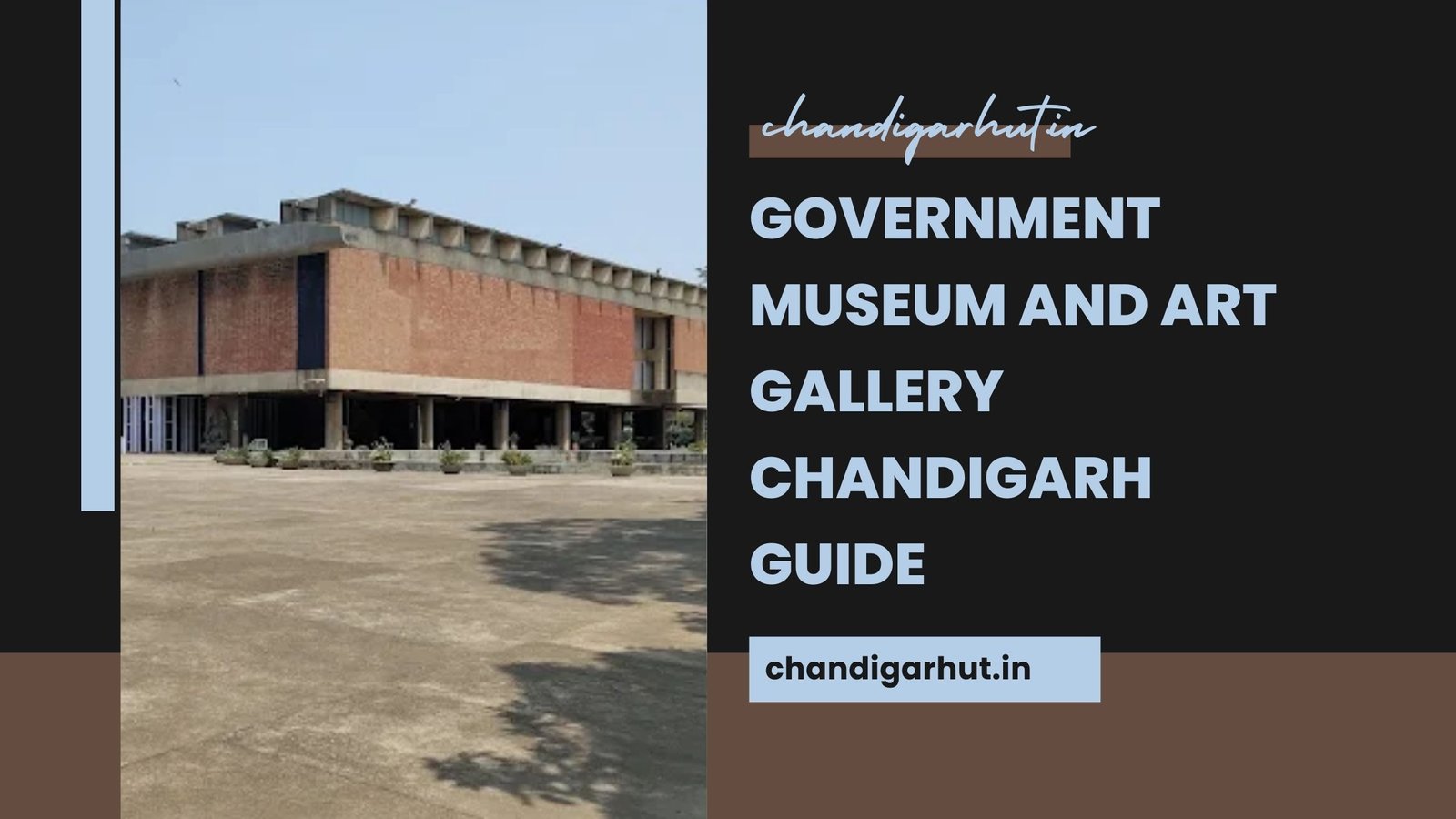
One of the most remarkable aspects of the Government Museum and Art Gallery Chandigarh is that the building itself is a work of art. Designed by legendary Swiss-French architect Le Corbusier, the museum is part of Chandigarh’s Cultural Complex and showcases principles of modern architecture.
Here’s why architecture lovers can’t stop talking about this place:
- Exposed concrete and massive form speak to the modernist aesthetic.
- Saw-tooth roof design brings controlled, soft lighting into the galleries ideal for exhibiting delicate artifacts without harsh glare.
- Rainwater channels and water pools demonstrate an innovative approach to passive cooling and site sustainability.
The building’s thoughtful design not only protects priceless pieces but also enhances the emotional experience of visitors.
Practical Guide Visiting the Government Museum and Art Gallery Chandigarh
Wondering about the logistics? Here’s the inside scoop:
| Item | Details |
|---|---|
| Location | Sector 10-C, Chandigarh, Union Territory of Chandigarh, India |
| Timings | Tue–Sun: 10:00 AM–4:30 PM (Closed Monday & public holidays) |
| Entry Fee | Adults ~₹10–₹30; children & students often discounted. |
| Camera Fee | Additional nominal charge. |
| Average Visit Time | 1.5–3 hours (more if you love art!) |
Pro Tip: Tuesday through Thursday mornings are quieter if you want a serene experience. Guided tours enhance insights into the Government Museum and Art Gallery Chandigarh’s treasures.
Real-Life Magic How a Student Changed Her View of History
Meet Ananya, an art history student from Delhi:
“I visited the Government Museum and Art Gallery Chandigarh during my semester break. I thought it was just another museum. But walking through the Gandhara sculptures, I felt connected to a world I’d only read about in textbooks. I stayed for three hours, sketching and journaling something no class could have taught me. It changed the way I see art and history.”
This story isn’t just heartwarming it underscores how the Government Museum and Art Gallery Chandigarh doesn’t just present facts; it creates emotional connections, sparking curiosity and lifelong appreciation.
How Does the Government Museum and Art Gallery Chandigarh Preserve India’s Cultural Identity?
The Government Museum and Art Gallery Chandigarh plays a crucial role in preserving India’s layered cultural identity by acting as a bridge between ancient civilizations and modern audiences. Through carefully curated galleries ranging from Gandhara sculptures to miniature paintings the museum ensures that artistic traditions are not frozen in time but remain accessible, relevant, and meaningful. Each exhibit is supported by historical context, scholarly research, and conservation practices that protect fragile artifacts for future generations.
Beyond display, the Government Museum and Art Gallery Chandigarh actively contributes to cultural continuity by collaborating with historians, archaeologists, and academic institutions. These partnerships help verify provenance, interpret symbolism, and present narratives with accuracy and authority an important E-E-A-T signal that search engines increasingly value. For visitors, this translates into a learning experience rooted in trust, expertise, and authenticity.
Why Is the Government Museum and Art Gallery Chandigarh Important for Students and Researchers?
For students, scholars, and competitive-exam aspirants, the Government Museum and Art Gallery Chandigarh functions as a living classroom. History textbooks often summarize centuries in a paragraph but here, learners can study original sculptures, inscriptions, coins, and manuscripts firsthand. This direct exposure deepens understanding of Indian art history, Buddhist iconography, medieval aesthetics, and colonial transitions.
Researchers especially value the museum’s categorized documentation, reference materials, and object labeling system. By offering access to verified artifacts and structured archives, the Government Museum and Art Gallery Chandigarh supports academic inquiry, thesis work, and visual research making it one of North India’s most academically relevant museums.
How Does a Visit to the Government Museum and Art Gallery Chandigarh Feel in Real Life?
Walking through the Government Museum and Art Gallery Chandigarh is not rushed it’s reflective. The silence of the galleries, the natural light filtering through Le Corbusier’s architectural design, and the slow progression of exhibits create an emotional rhythm that encourages contemplation. Visitors often describe feeling grounded, curious, and surprisingly connected to history despite centuries separating them from the objects on display.
Frequently Asked Questions
Q: What are the opening hours for the Government Museum and Art Gallery Chandigarh?
A: It is open from 10:00 AM to 4:30 PM from Tuesday through Sunday. The museum is closed on Mondays and public holidays.
Q: How much does it cost to enter the Government Museum and Art Gallery Chandigarh?
A: Entry fees are nominal, typically ₹10–₹30 for adults with discounted or free entry for children and students.
Q: Is photography allowed inside the museum?
A: Yes, photography is allowed in designated sections, usually with a small camera fee
Q: What is the best time to visit the Government Museum and Art Gallery Chandigarh?
A: Morning hours on weekdays tend to be quieter and ideal for focused viewing.
Q: Can I learn about Indian architecture here?
A: Yes, the Government Museum and Art Gallery Chandigarh includes architectural exhibits and insights into Chandigarh’s urban design legacy.
Final Thoughts
If places could speak, the Government Museum and Art Gallery Chandigarh would tell stories of war and peace, emperors and common folk, old masters and modern visionaries. It’s not just a stop on your Chandigarh itinerary it’s a destination that invites reflection, wonder, and connection.
Whether you’re an art enthusiast, student, traveler, or local resident seeking new inspiration, the Government Museum and Art Gallery Chandigarh offers a cultural adventure that stays with you long after you’ve walked out its doors.
\Read more verified travel and heritage guides on Chandigarh UT, your go-to platform for Chandigarh’s culture, history, and local stories.