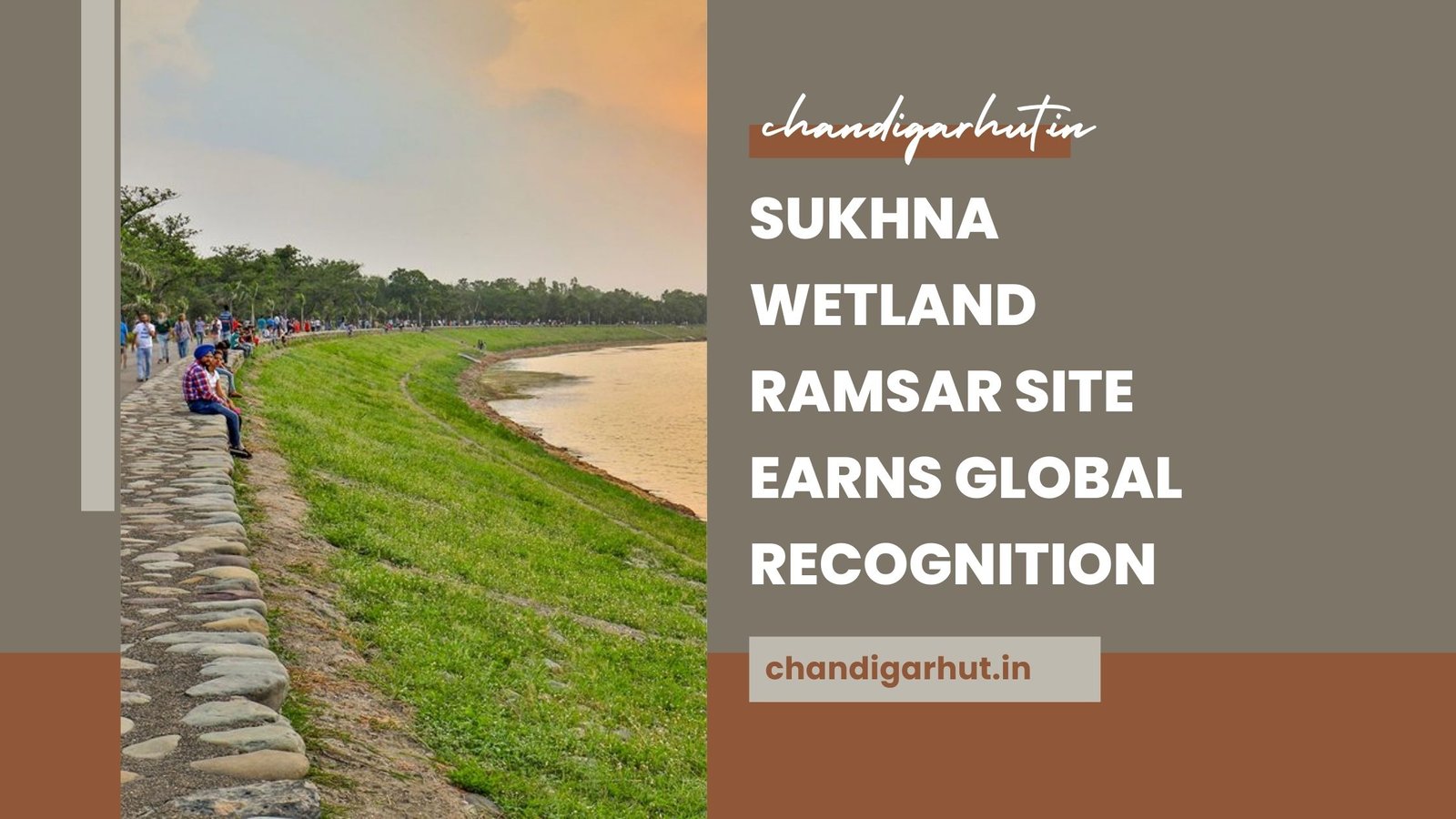
The serene waters of Sukhna Wetland Ramsar Site have long reflected the golden hues of sunrise over Chandigarh. But now, this iconic ecological jewel has crossed an environmental milestone official approval to become a Ramsar wetland, gaining international recognition for its ecological value, biodiversity, and cultural significance.
From migratory birds to rare aquatic species, millions of lives human and wildlife depend on this 565-acre wonder. This isn’t just nature news. This is a story of environmental resilience, community pride, scientific validation, and global responsibility.
Key Takeaways
• The Sukhna Wetland Ramsar Site is officially approved for international recognition by the Government of India.
• Spread across 565 acres with a 10,000+ acre catchment, it meets multiple Ramsar criteria.
• It is the first Ramsar site in Chandigarh, elevating ecological protection and tourism potential.
• Recognition will boost conservation actions and scientific monitoring.
• Ramsar status strengthens community engagement in safeguarding critical ecosystems.
What Is the Sukhna Wetland Ramsar Site and Why Does It Matter?
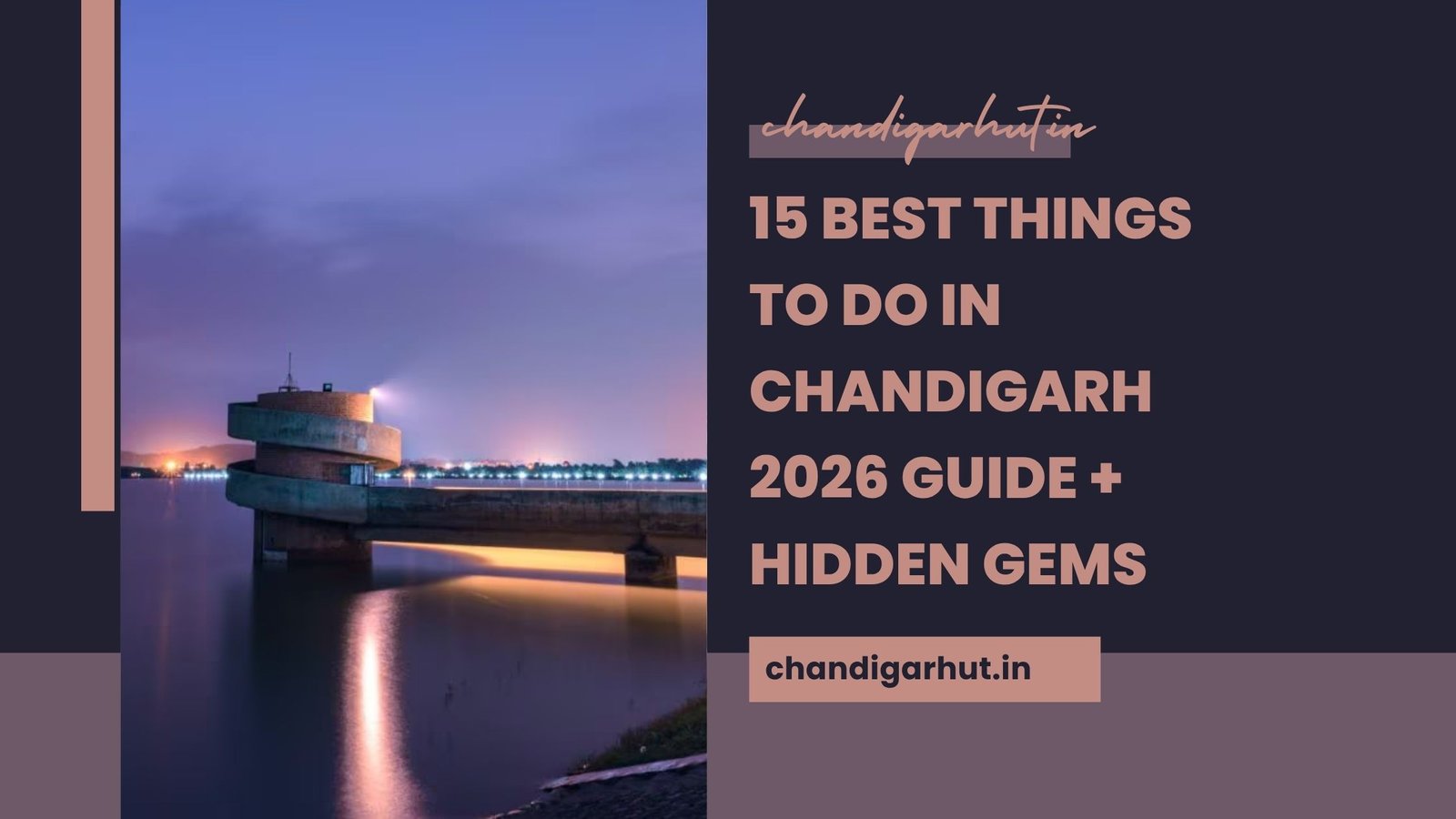
The Sukhna Wetland Ramsar Site refers to the globally recognized wetland formed by the reservoir of Sukhna Lake, a human-made lake created in 1958 at the foothills of the Shivalik Hills in Chandigarh, India.
Ramsar is an international convention signed in 1971 in Ramsar, Iran, dedicated to conserving wetlands of international importance.
A wetland earns Ramsar status only if it meets strict scientific and ecological criteria a testament to its biodiversity value, hydrological importance, and ecosystem services.
The approval of the Sukhna Wetland Ramsar Site means this ecosystem now ranks among the world’s most valued wetlands on par with places like Keoladeo National Park in Rajasthan and Loktak Lake in Manipur.
What Are the Unique Features of the Sukhna Wetland Ramsar Site?
The Sukhna Wetland Ramsar Site is not just a lake it is an ecological mosaic where water, wildlife, climate, and culture intersect.
Extraordinary Birdlife
- Home to over 50 species of migratory birds annually
- Wintering grounds for ducks, Siberian cranes, and herons
- A hotspot for birdwatchers and ornithologists
Rich Biodiversity
- Aquatic plants that support water purification
- Fish and micro-invertebrates crucial to food webs
- Habitat for amphibians and wetland reptiles
Hydrological Importance
- Acts as a natural flood buffer during monsoons
- Supports groundwater recharge
- Controls soil erosion in nearby landscapes
Cultural and Recreational Value
- A favorite morning and evening destination for residents
- A space for meditation, nature walks, and art
- Location for educational field trips
This diversity is why the Sukhna Wetland Ramsar Site meets three out of nine Ramsar criteria, which is rare for urban wetlands.
How Did Sukhna Become a Ramsar Site? A Timeline
| Year | Milestone |
|---|---|
| 1958 | Sukhna Lake was created. |
| 1970s-1990s | Wetland conservation initiatives began locally. |
| 2000s | Scientific studies established ecological significance. |
| 2010s | Government of Chandigarh proposed Ramsar nomination. |
| 2025 | Ministry of Environment, Forest & Climate Change approved the proposal. |
| 2026 | Designation anticipated to be formalized (final government procedures). |
This progression highlights years of research, planning, and advocacy not a single day decision.
Why Is the Sukhna Wetland Ramsar Site Instant Global News?
Because Ramsar status is not handed out lightly.
It places Chandigarh on the global ecological map.
The Sukhna Wetland Ramsar Site now joins over 2,400 internationally recognized wetlands worldwide ecosystems acknowledged for supporting high biodiversity, providing essential water services, and requiring protection.
The world watches Sukhna not just as a beautiful lake, but as a living ecosystem, crucial for climate resilience and biodiversity.
How Does Ramsar Recognition Protect the Sukhna Wetland?
Recognition under the Ramsar Convention offers multiple layers of protection and opportunity:
Stronger Legal Safeguards
- Enhanced actions to control pollution
- Tighter land-use monitoring
- Greater responsibility to sustain ecological character
Scientific Monitoring
- Systematic tracking of bird migrations
- Water quality assessments
- Habitat restoration programs
Funding and Support
- Access to international wetland conservation funds
- Partnerships with global organizations
Local Stewardship
- Community awareness programs
- Eco-tourism guidelines to prevent damage
- School and university wetland curricula
This means the Sukhna Wetland Ramsar Site will receive scientific, financial, and regulatory attention far more than before.
What Makes Sukhna Wetland Meet Ramsar Criteria?
To qualify as a Ramsar site, wetlands must satisfy at least one of nine criteria focused on biodiversity, rare species, ecological function, and water services.
The Sukhna Wetland Ramsar Site fulfills:
Criterion 2 – supports vulnerable, endangered, or critically endangered species.
Criterion 4 – supports plant and animal species at critical life stages.
Criterion 6 – regularly supports 20,000+ waterbirds or 1% of a waterbird population.
This achievement is scientifically validated through years of field studies from ornithologists, hydrologists, and conservationists.
Real-Life Story A Day with a Migratory Visitor
Every winter, thousands of birds arrive from as far away as Siberia. One winter morning, ornithologist Dr. Aruna Mishra watched a flock of Common Teal settle onto Sukhna waters:
“When I see their synchronized movement, I realize Sukhna is more than a lake it’s a journey, a home, a life support system for beings I may never touch but whose presence enriches our world.”
This emotional connection reflects the deeper value of the Sukhna Wetland Ramsar Site a place where science meets soul.
What Are the Threats Facing the Sukhna Wetland Ramsar Site?
Even with Ramsar status, threats remain.
Current Challenges
- Siltation from upstream runoff
- Human disturbance on shoreline areas
- Water pollution from urban sources
- Climate change affecting migratory patterns
Needed Interventions
- Sustainable catchment management
- Wetland buffer restoration
- Community-led cleanup drives
- Policy implementation at municipal levels
Ramsar recognition doesn’t eliminate issues but it strengthens the toolkit to address them.
How Does Sukhna Wetland Ramsar Site Benefit Chandigarh?
Environmental Benefits
- Improved air and water quality
- Enhanced flood resilience
- Support for native flora and fauna
Educational & Cultural Benefits
- Living classroom for students
- Inspiration for artists and writers
- Enhanced environmental identity for residents
Economic & Tourism Boost
- Eco-tourism promotion
- Birdwatching festivals
- Local economy uplift through guided tours
The Sukhna Wetland Ramsar Site is not just an ecological label it’s a community asset.
How Can Citizens Participate in Protecting the Sukhna Wetland Ramsar Site?
Community actions are crucial.
Volunteer Programs
- Wetland cleanup days
- Bird counting events
- Native plant restoration groups
Education & Advocacy
- School environmental clubs
- Public lectures by conservation experts
Responsible Tourism
- Avoid littering
- Keep safe distance from birds
- Use eco-friendly transport
Every citizen can be a guardian of the Sukhna Wetland Ramsar Site.
Ramsar Site Comparison Sukhna vs Other Indian Ramsar Wetlands
| Feature | Sukhna Wetland Ramsar Site | Keoladeo NP (Rajasthan) | Loktak Lake (Manipur) |
|---|---|---|---|
| Urban Wetland | Yes | No | Partial |
| Bird Migration | High | Very High | Moderate |
| Tourist Footfall | High | Very High | Medium |
| Cultural Visits | Community-centric | National & International | Local & Regional |
| Water Purification Role | Significant | Moderate | High |
| Ramsar Recognition Year | 2026* | 1981 | 1990 |
*pending final formalities*
FAQs
Q: What is the Sukhna Wetland Ramsar Site?
A: The Sukhna Wetland Ramsar Site is the internationally recognized wetland in Chandigarh approved by the Government of India as meeting Ramsar Convention criteria for ecological importance.
Q: Why is Ramsar status important for Sukhna Wetland?
A: Ramsar status provides global recognition, stronger conservation protection, scientific monitoring, and sustainable development support for the Sukhna Wetland Ramsar Site.
Q: When was Sukhna Wetland approved as a Ramsar site?
A: The Ministry of Environment, Forest and Climate Change approved the proposal in 2025, and formal designation is expected to be finalized in 2026.
Q: How large is the Sukhna Wetland Ramsar Site?
A: The core area is approximately 565 acres with a broader catchment area exceeding 10,000 acres.
Q: What wildlife does the Sukhna Wetland Ramsar Site support?
A: It supports migratory birds, resident waterfowl, fish, amphibians, and diverse plant life crucial for wetland health.
Final Thoughts
The Sukhna Wetland Ramsar Site symbolizes more than biodiversity. It represents hope that in the age of global warming, caretakers on the ground can still protect nature with wisdom, dedication, and shared purpose.
Whether you’re a resident, visitor, student, or bird enthusiast this wetland connects us. It teaches us to value life in its many forms and reminds us that conservation is an inheritance we pass to future generations.
Let the calm ripples of Sukhna reflect not just Chandigarh’s skyline but the collective heart of Earth-centric stewardship. Stay updated with trusted Chandigarh environmental news and in-depth local insights only on ChandigarhUT.in.