Chandigarh is buzzing with excitement as the Chandigarh Wildlife Survey 2025—the city’s most ambitious biodiversity documentation effort—unfolds from November 20 to 28. This isn’t just another forest exercise; it’s the first citywide wildlife assessment that expands far beyond the Sukhna Wildlife Sanctuary. For nature lovers, students, volunteers, and researchers, this survey is an eye-opening opportunity to understand how rich and alive Chandigarh’s natural ecosystems truly are.
Key Takeaways
- Chandigarh Wildlife Survey 2025 is the city’s largest and first full-scale wildlife documentation across all forest areas.
- The survey uses scientific and advanced tools including camera traps, transects, and night surveys.
- It covers mammals, birds, reptiles, and includes the Asian Waterbird Count (AWC) at Sukhna Lake.
- Conducted by the UT Forest & Wildlife Department with expert support from the Wildlife Institute of India (WII).
- Massive public participation—volunteers, NGOs, and students—makes it a citizen-driven conservation effort.
What Makes the Chandigarh Wildlife Survey 2025 So Significant?
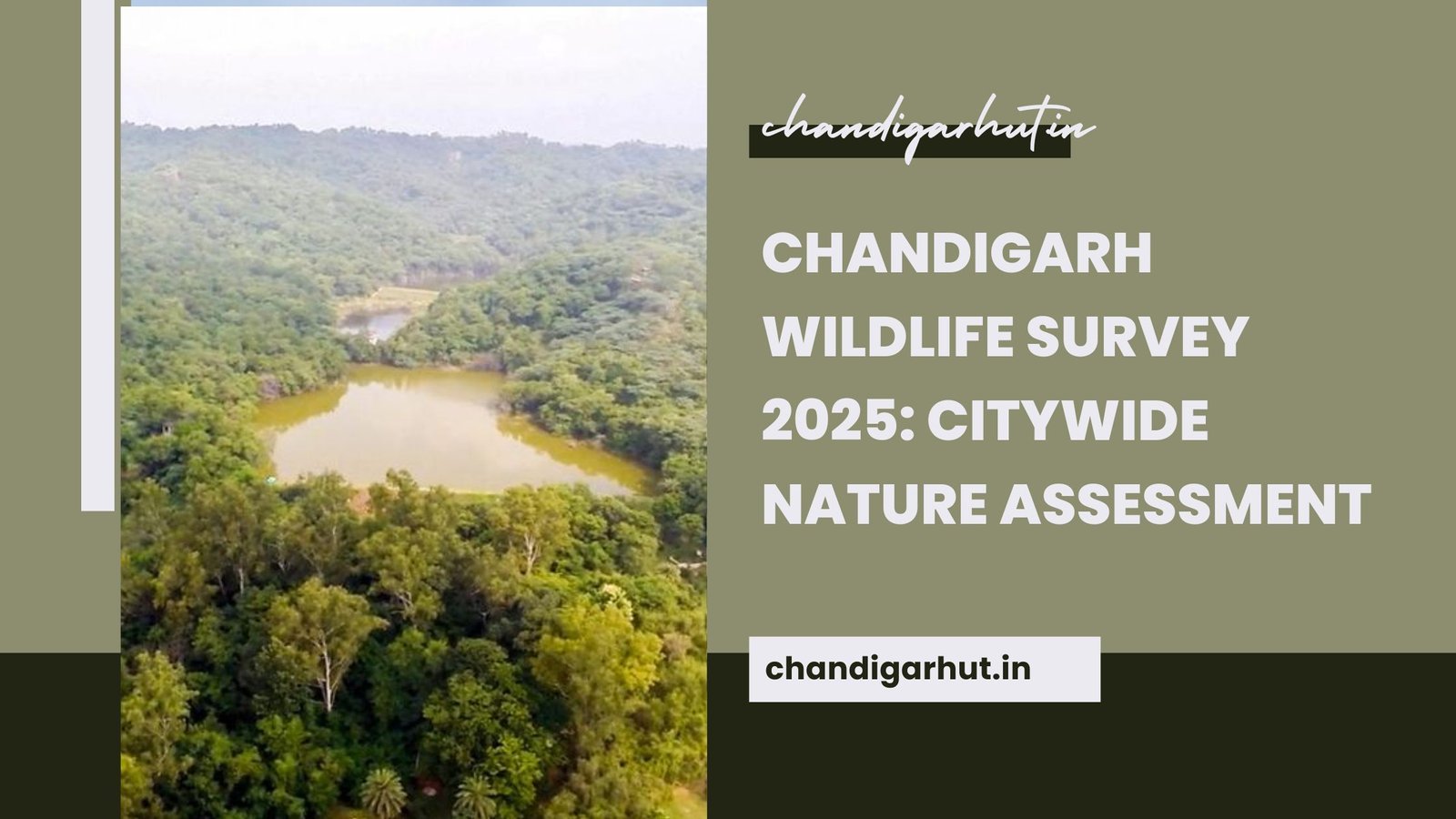
The Chandigarh Wildlife Survey 2025 stands out because, for the first time, the UT Forest Department is surveying all natural forest blocks together, including:
- Sukhna Choe Reserve Forest
- Patiala-ki-Rao
- Lake Forest Area
- Botanical Garden
- Urban biodiversity corridors
Earlier surveys focused mainly on the Sukhna Wildlife Sanctuary. But this time, the approach is bigger, better, and more scientific, making it one of the most comprehensive ecological assessments ever conducted in a union territory.
This citywide approach helps identify wildlife presence, habitat distribution, vulnerable species, and human-wildlife interaction patterns—crucial for future conservation planning.
How Is the Chandigarh Wildlife Survey 2025 Conducted?
The survey is run with a mix of modern scientific tools and traditional fieldwork methods.
Techniques used during the Chandigarh Wildlife Survey 2025:
- Camera traps to capture shy or nocturnal animals
- Line transects for mammal and bird sightings
- Point counts for bird diversity
- Night surveys for owls, reptiles, and nocturnal mammals
- Habitat sampling to assess vegetation, food availability, and habitat health
- Asian Waterbird Count (AWC) simultaneously at Sukhna Lake
These techniques ensure accuracy, reduce guesswork, and generate reliable scientific data that the city can use for years.
Which Species Are Documented in the Chandigarh Wildlife Survey 2025?
The survey focuses on multiple taxonomic groups, offering a full ecological picture.
Mammals:
- Indian muntjac (barking deer)
- Sambar
- Wild boar
- Indian hare
- Indian civet
- Golden jackal
- Porcupine
Birds (including AWC species):
- Northern Shoveler
- Common Teal
- Great Cormorant
- Grey Heron
- Indian Peafowl
- Sunbirds, barbets, woodpeckers
- Migratory ducks and waders
Reptiles:
- Indian cobra
- Monitor lizard
- Rat snake
- Geckos and skinks
The integration of the Asian Waterbird Count adds another scientific layer—helping the city track long-term waterbird population trends.
This makes the Chandigarh Wildlife Survey 2025 scientifically meaningful, not just a record-keeping exercise.
How Is Public Participation Strengthening the Chandigarh Wildlife Survey 2025?
One of the most heartwarming aspects of the Chandigarh Wildlife Survey 2025 is the massive involvement of everyday citizens.
People participating include:
- School & college students
- NGOs
- Nature clubs
- Wildlife photographers
- Residents passionate about conservation
The UT Forest Department and WII Dehradun experts conducted orientation sessions to teach them:
- species identification
- data recording
- ethical field practices
- safety guidelines
This builds a culture of citizen-led ecological monitoring, empowering people to care for the forests they live around.
What Are Experts Saying About the Chandigarh Wildlife Survey 2025?
“This survey will help Chandigarh understand its ecological strengths and vulnerabilities. A city can only protect what it can measure.”
— Wildlife Institute of India (WII) Research Team
Their involvement ensures accurate assessments, scientific rigor, and real-world conservation outcomes.
How Is the Chandigarh Wildlife Survey 2025 Different from Previous Surveys?
Here’s a quick comparison:
| Feature | Previous Surveys | Chandigarh Wildlife Survey 2025 |
|---|---|---|
| Geographic scope | Mostly Sukhna Wildlife Sanctuary | Entire Chandigarh forest landscape |
| Techniques used | Basic field observations | Camera traps, transects, night surveys |
| Public participation | Limited | Large-scale citizen involvement |
| Scientific support | Occasional | Official support from WII |
| Taxonomic coverage | Birds or mammals separately | Mammals, birds, reptiles + AWC combined |
| Conservation value | Local insights | Citywide ecological planning tool |
This comparative approach is why the Chandigarh Wildlife Survey 2025 is being celebrated as a turning point.
Why Is the Chandigarh Wildlife Survey 2025 Important for the City’s Future?
This survey lays the foundation for:
- Urban biodiversity protection policies
- Wildlife-friendly planning in buffer zones
- Reducing human-wildlife conflict
- Preserving migratory bird habitats
- Boosting ecological tourism
- Educating the next generation about local wildlife
Urban cities often forget their forests—but Chandigarh is doing the opposite.
The Chandigarh Wildlife Survey 2025 is a reminder that even planned cities thrive when nature does.
Real-Life Example: A Volunteer’s Experience
During a night survey near the Sukhna Choe trail, a volunteer group spotted:
- a porcupine,
- several nightjars,
- and a golden jackal pair captured on camera trap.
For many, it was their first direct experience seeing these species in the wild.
Moments like these make the Chandigarh Wildlife Survey 2025 more than just a scientific exercise—it becomes a life-changing memory.
How Will the Chandigarh Wildlife Survey 2025 Benefit Citizens?
Residents will gain:
- Cleaner and better-managed green spaces
- More awareness about local wildlife
- Reduced conflict with wild animals
- Better recreational nature trails
- Sustainable city planning decisions
A city that knows its wildlife is a city that grows responsibly.
FAQs
What is the Chandigarh Wildlife Survey 2025?
It is a citywide biodiversity survey conducted from November 20–28 to document mammals, reptiles, birds, and waterbirds across all forest areas.
Who is conducting the Chandigarh Wildlife Survey 2025?
The UT Forest & Wildlife Department with scientific support from the Wildlife Institute of India (WII), Dehradun.
Which areas are covered in the survey?
Sukhna Sanctuary, Sukhna Choe, Patiala-ki-Rao, Lake Forest, Botanical Garden, and biodiversity corridors.
Can citizens participate?
Yes. Volunteers, NGOs, students, and nature enthusiasts are actively involved after training sessions by WII experts.
Why is this survey important?
It helps improve conservation planning, protect wildlife habitats, reduce conflict, and strengthen ecological monitoring.
Conclusion
The Chandigarh Wildlife Survey 2025 isn’t just a scientific project—it’s a celebration of the city’s deep connection with nature. By bringing together experts, volunteers, and modern wildlife-monitoring techniques, Chandigarh is building a stronger foundation for ecological planning, biodiversity preservation, and long-term environmental resilience.
If the city continues on this inspiring path, its forests will remain alive, protected, and thriving for generations to come.
👉 Want to stay updated with Chandigarh’s latest environment, wildlife, and local developments?
Visit Chandigarh UT at chandigarhut.in for more helpful stories, guides, and real-time updates.